Overview
Building a real-money game used to be a six-figure engineering project: smart contracts, a randomness source players would trust, a wallet stack, a swap route so people could fund an account, payout logic, and a front end that did not look like a spreadsheet.
On Superstake all of that already exists and is shared across every platform on the network. You bring a brand. You get your own platform at its own address on Superstake, with your name, logo, colours, socials and games, all provably fair from day one.
Three decisions are actually yours.
1. Who it is for
Almost every platform that works on Superstake extends an audience that already exists:
- A token community — a place to play together, with the token set up as the platform's currency by our team if you want it.
- An NFT or gaming brand — your characters and art become the game's skin.
- A chain or ecosystem — a branded arcade gives your community a place to play.
- A creator or community — a name people already trust is the hardest part of this to buy, and you have it.
If you cannot name the first hundred players, that is the problem to solve before the software.
2. Your currency and chain
A new platform plays in USD credit on our default network, so players need no wallet signature and pay no network fee. See Credit.
- A different token is set up with our team. Ask before you publish, because a live platform has to be taken down to change it.
- New EVM chains can be added with a contract deployment and no new game code, and Solana and TON are supported.
- Players do not need to hold a token first. Deposits from other chains can be swapped into USD credit, and where card top-ups are enabled, players can buy credit by card.
3. Your games
You are not commissioning game development. You pick from the shared catalogue — crash games, coin flip, claw machine, grid runs, AI fighting tournaments — and each one inherits your theme and your platform's currency. Which games you offer is a setting you can change after launch.
Every game is pure chance. No skill component, no house discretion in the outcome. See Provably Fair & ZK Proofs for how that is enforced — and why you could not rig a result even if you wanted to, which is exactly what makes the guarantee worth something to your players.
Browse live games and channels to see what others have launched.
Building it
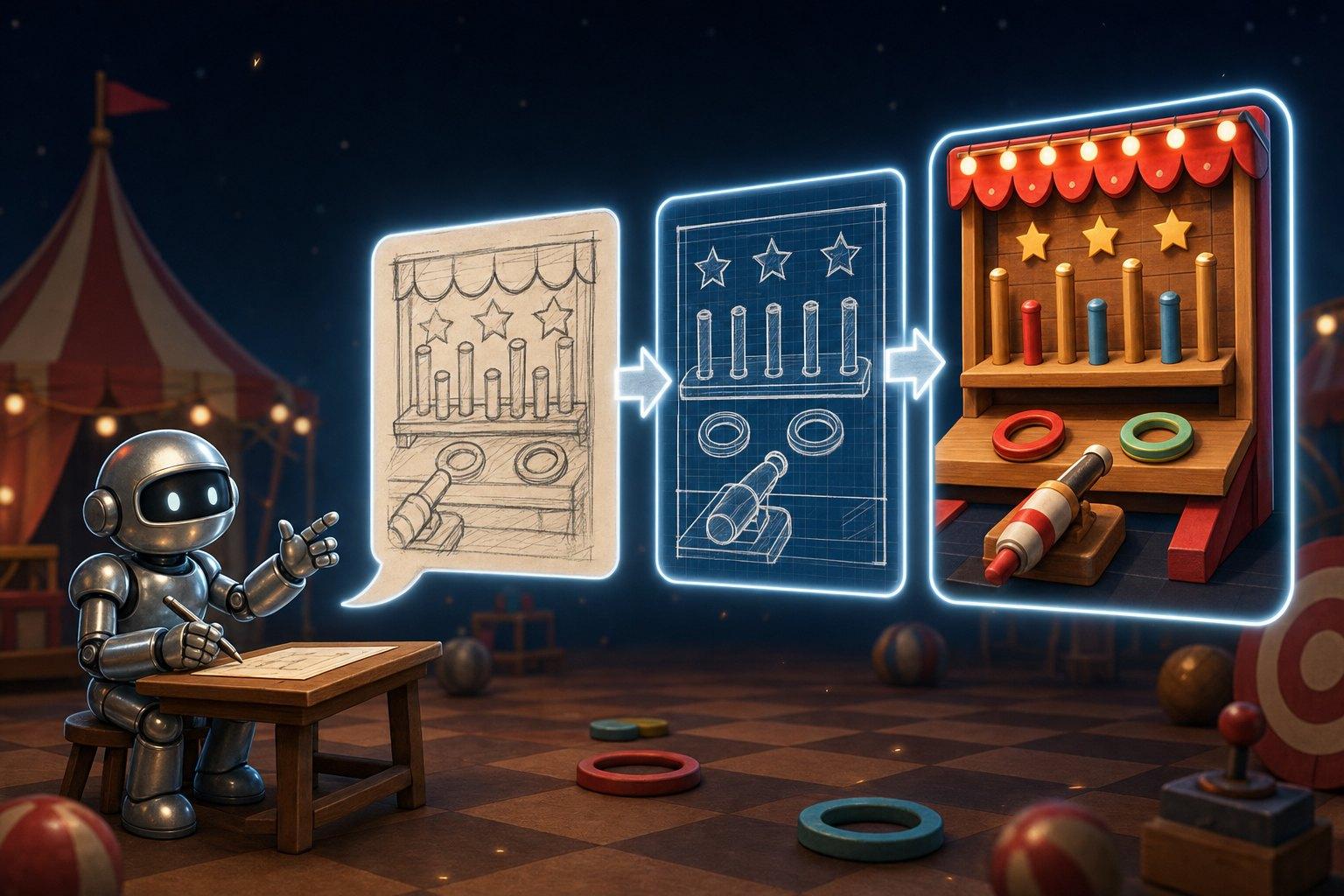
Creator Studio is the part that replaces the engineering team. Describe the brand you want — a name, a vibe, a few reference images — and the studio agent writes the description, draws a logo and themed tiles, picks a palette, and assembles a playable preview. You tweak what you disagree with, and publish.
The Creator Studio guide walks through that flow in detail: what the agent can and cannot do for you, what you can edit by hand, and what happens when you submit.
Where it lives
- At its own address on Superstake,
superstake.fun/your-brand, under the Superstake header. This is what you get self-serve, and it can be listed on the hub, where players browsing the network find it. - On a dedicated subdomain, with your brand across the header and login, set up with our team. Superstake's name can still appear in places such as the browser tab, share text and emails.
What it costs
A platform has no setup fee and no per-seat cost. In the studio, drawings and game builds have a price, shown as you go. You earn a weekly share of your platform's net profit, after referral and points costs. The share is capped against volume, and a losing week reduces it.
The Superstake Handbook covers RTP, prize pots and how payouts settle.
Next steps
- Open Creator Studio and describe your brand.
- Read the Creator Studio guide for the full build flow.
- Browse live games and channels to see the range of what people have built.